
The Housing-TLC Framework: Michael Wright’s 4-Step Methodology for a Dignified Senior Transition in Ontario
When Home No Longer Fits: A Family Guide to Later-Life Housing Transitions in Ontario
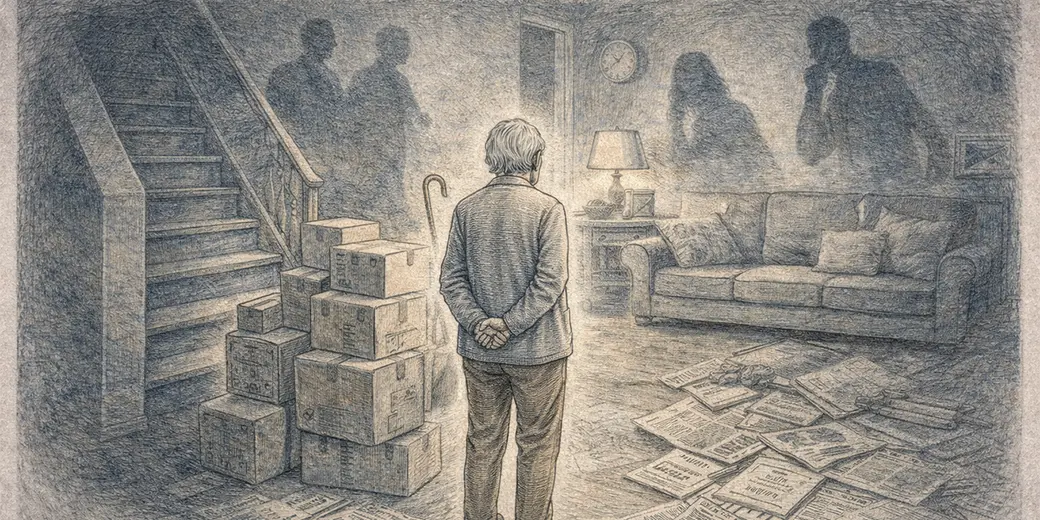
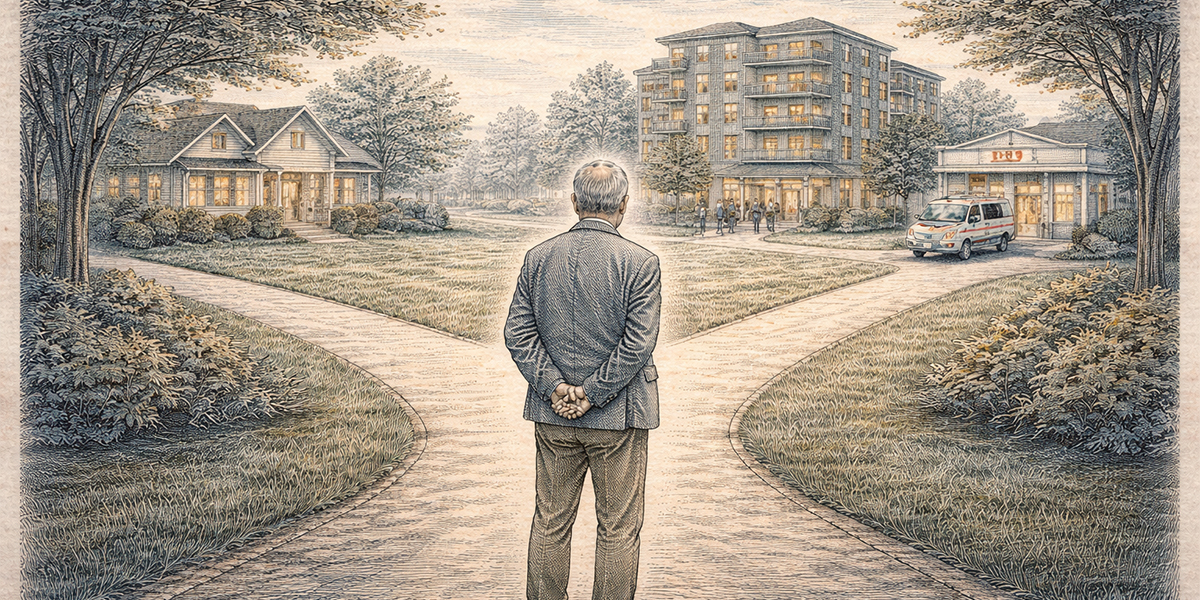
Making a housing transition is challenging at any age, but the stakes rise sharply as we get older. For many Ontario families, whether you are a senior like Grace, wondering if your family home still fits, or a devoted daughter like Susan, concerned about a parent’s safety, the process can feel like standing at a crossroads without a map.
“We don’t know where to start, and we don’t want to make the wrong choice”.
That is the refrain we hear most often. The question is never just about real estate, it’s about life. The Housing-TLC (Transition & Lifestyle Consulting) program, developed by Michael Wright, was created specifically to address this challenge. It brings clarity by asking the right questions at the right time, guiding families through the emotional and practical journey of a later-life housing transition with dignity, peace of mind, and a concrete plan.
Why We Get Stuck: The Four Invisible Barriers
Before looking at floor plans or real estate listings, it helps to understand why this decision feels so heavy. In over four decades of real estate experience, we have identified four barriers that consistently cause “analysis paralysis”:
- Denial: Admitting that a family home is no longer sustainable can feel like admitting a loss of independence. “I’m fine” is a common refrain, even when the stairs have quietly become a daily struggle.
- Lack of Information: Many perceptions of senior living are 20 years out of date. People often fear “being put away” because they don't realize the vibrant, social, and supportive options available today.
- Magnitude of the Process: The sheer volume of “stuff” accumulated over 40 years is overwhelming. It’s easier to do nothing than to decide what to do with the basement.
- Fear: Fear of the unknown, fear of losing control, and fear of making a financial mistake.
The Housing-TLC system is designed to dismantle these barriers, transforming a frightening, messy decision into a simple, dignified, and doable plan.
Transition Plan to Transaction Implementation
Most real estate agents focus on the transaction, selling the house. At Homestead Den, Michael Wright focuses on the transition. We believe that the real estate sale is merely the implementation of a much larger life plan.
Our framework follows four essential steps:
- Step 1: WHY? Defining the needs and the reasons for a change.
- Step 2: WHAT? Identifying the type of housing that meets those needs.
- Step 3: WHERE? Locating the right community or home.
- Step 4: HOW? Facilitating the real estate transaction and the move.
Navigating the Three Lanes of Housing in Ontario
When we look at "What" type of home fits, we generally look at three distinct lanes. Understanding these is vital to maintaining your autonomy.
- Lane 1: Staying Home with Support. This works if the home is safe and you are generally independent. However, it requires a realistic look at the cost of bringing in private care.
- Lane 2: Retirement Residences (The Social Model). These are private-pay communities that offer a "cruise ship" lifestyle. You have a private suite, meals are provided, and social activities are built-in. You only pay for the specific care services you choose.
- Lane 3: Long-Term Care (The Medical Model). This is for those requiring 24/7 nursing care. In Ontario, these are government-subsidized and managed through a priority-based waitlist.
The Financial Truth: Is Your "Paid-Off" Home Really Free?
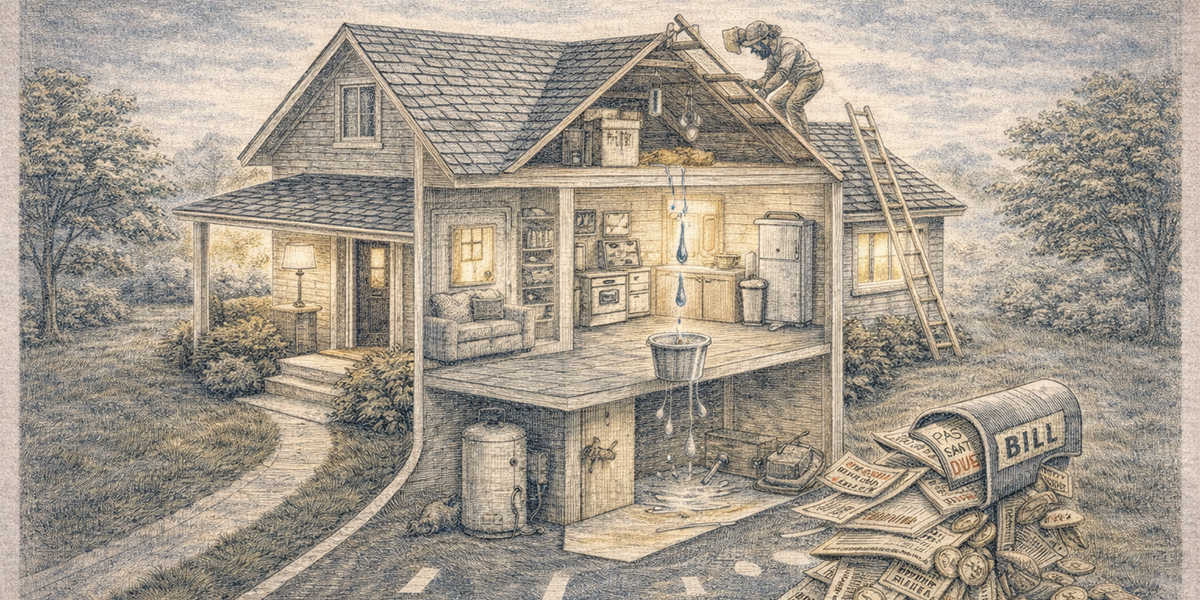
One of the most important sections of our Housing-TLC Workbook involves a reality check on home finances. Many seniors believe that because their mortgage is paid off, their housing is free. This is a myth that can mumble your quality of life.
When we tally the real numbers, property taxes, insurance, utilities, and the inevitable maintenance, the costs are staggering. Replacing a roof, a furnace, or a deck can easily exceed $10,000 per project. In many Ontario markets, a "paid-for" home can easily cost $20,000 a year just to operate.
Furthermore, we must consider the Opportunity Cost of Money. If you have $1,500,000 in home equity, that capital is currently "lazy." At a conservative 5% return, that equity has an opportunity cost of $75,000 a year (pre-tax). By unlocking that equity, you aren't just selling a house; you are funding a lifestyle where your needs are met without dipping into your savings.
Safety and Socialization: The Hidden Risks of Staying Too Long
Our Housing-TLC assessment looks beyond the finances and into two critical areas:
1. Safety: Internal vs. External Threats
Internal threats are things like loose rugs, steep stairs, or poor lighting in the bathroom, the "minefields" that lead to falls. External threats are equally dangerous: isolation, phone scams, and financial elder abuse. A community-based setting provides a "safety net" that a single-family home cannot.
2. Socialization: The "Secret" to Longevity
This is perhaps the most overlooked factor. The World Health Organization (WHO) has stated that the risks of social isolation are as dangerous to your health as smoking or obesity. Human beings are not meant to live in isolation; we need interaction and stimulation.
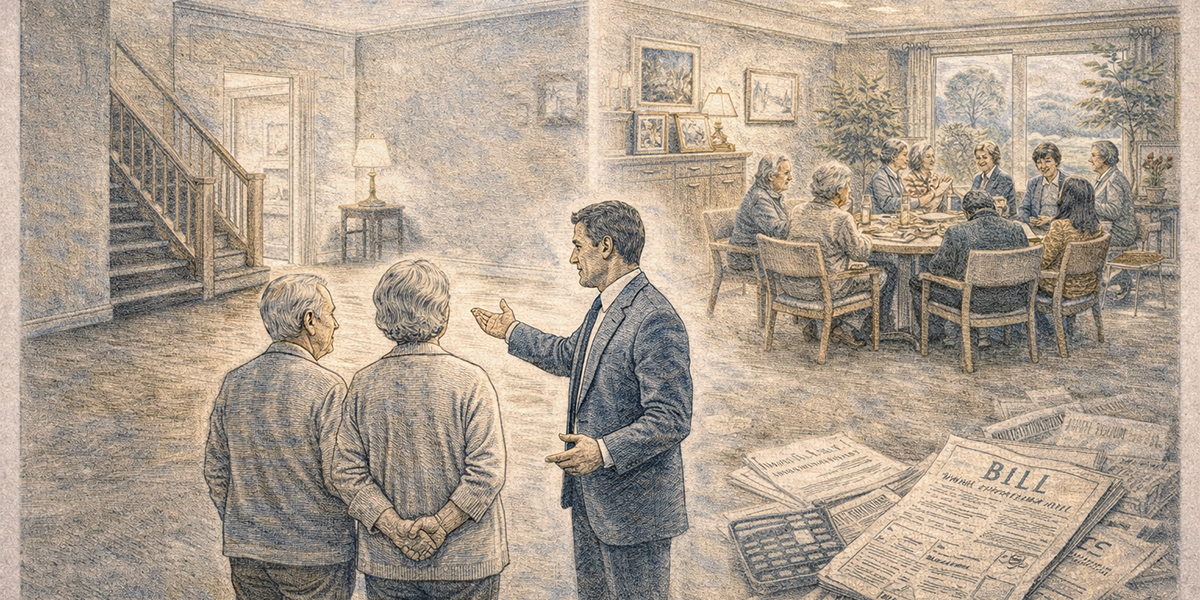
Many of our clients find that moving to a retirement residence doesn't take away their independence, it gives them their life back. They go from being "stuck at home" to having a circle of friends, a chef-prepared meal, and activities that keep their minds sharp.
The "Trial Stay" Advantage
We never want a client to feel pressured. That is why we often suggest a Trial Stay. Many residences in Ontario offer 30-day stays (often called "Winter Stays"). This is a "try before you buy" scenario. You can experience the food, the social life, and the support without selling your home.
In our experience, once a senior experiences the ease of life in a well-chosen residence, the fear of "moving" evaporates.
Conclusion: Don't Let the Crisis Decide for You
The worst time to make a housing decision is in a hospital hallway after a fall. By then, your options are limited, and the decision is often made for you by doctors or the government.
The Housing-TLC program is about taking control now. Whether you decide to stay home with modifications or move to a luxury residence, do it because it’s your plan, not because you were forced into it.
Ready to start your plan? Don't wait for a "broken hip" moment. Contact Michael Wright today to receive your copy of the Housing Transition Planning Workbook. You can fill out the form below or book a 15-minute "Clarity Call" with me.
No pressure. No sales pitch. Just the information and the plan you deserve.
Categories
Recent Posts




GET MORE INFORMATION