
To Move or Not to Move? The Question That Can Keep You Up at Night
We plan our vacations with precision. We plan our retirement savings for decades. We even pre-plan our funerals to ensure our families aren't burdened. Yet when it comes to where we'll live in our retirement years, we "wing it", or worse, we wait for a crisis to decide for us.
In my forty years in the real estate sector, I've seen hundreds of families jump straight to "Where should we move?" or "What type of house should I buy?" Instead, they should be asking the most important question first: "Why are we thinking of moving?"
This well-intentioned leap creates immediate anxiety because it focuses on the real estate transaction before defining the reason for the housing transition. If you feel paralyzed by the thought of moving, it isn't because you're indecisive, it's because you're asking the wrong question in the wrong order.
The 4 Roadblocks: Why You Haven't Decided Yet
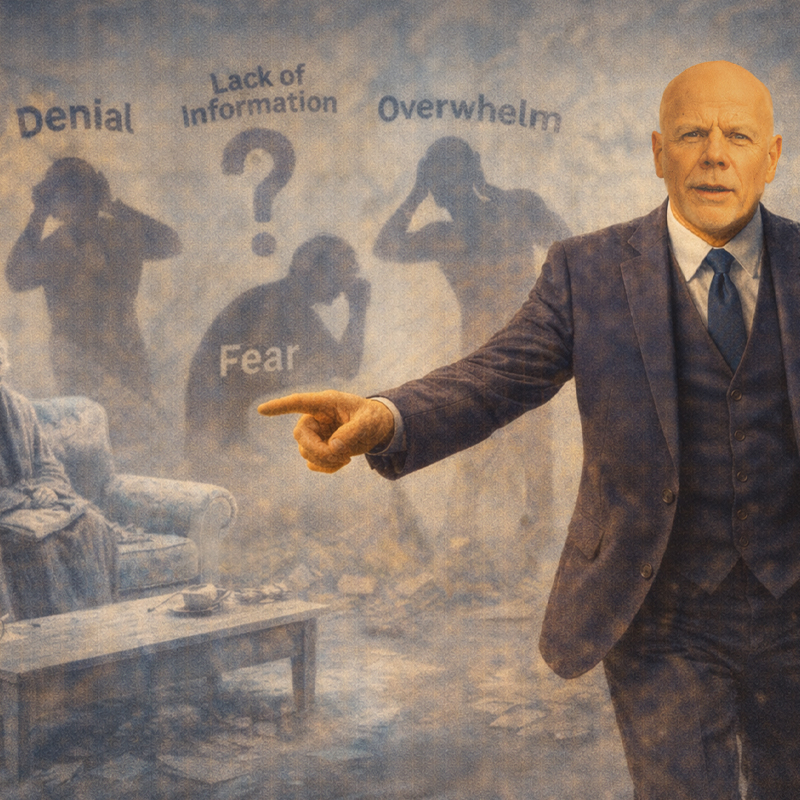
If you've been "thinking about it" for years but haven't taken a step, please know that this inaction isn't laziness, it's psychology. Four invisible roadblocks stall almost every senior transition:
- Denial: We tell ourselves, "I'm fine" or "This house is still perfect, we'll move when it's time." We all value our independence, and most of us refuse to admit that the house we've lived in for 20, 30, or 40 years may no longer be appropriate for our changing needs.
- Lack of Information: Fear-packed headlines proclaim the real estate market is "dead." Questions about housing options go unanswered, especially regarding the housing care continuum. Many families in Halton, Peel, and the Hamilton area are confused about the differences between home care, retirement residences, and long-term care.
- Magnitude of the Process: When you haven't moved in thirty or forty years, the sheer volume of "stuff" in the basement and garage feels insurmountable.
- Fear: This is the big one. Fear of making a financial mistake. Fear of losing your identity. Fear of regretting the move after the "Sold" sign goes up.
If you’re feeling stuck in ‘thinking about it’ mode, it’s likely because the process feels too big to tackle alone. But remember: having a plan isn't a contract to move, it’s an insurance policy for your future independence.
Download our free system: "Where Should We Go From Here?"
It’s a simple, calm planning system I’ve designed to help you get your thoughts out of your head and onto paper. Use it to audit your current costs, identify what truly makes you comfortable, and ensure that if circumstances change, your choices stay your choices.
To break through these roadblocks, we must move away from the hasty "Where/What" questions and focus on the right question: "Why?"
The Right Question vs. The Hasty Question
The hasty question has you focusing on buildings. The right question focuses on your quality of life.
Instead of looking at floor plans and neighbourhoods, I want you to ask:
"What would I like to be easier and more comfortable in my life?"
When we reframe the problem this way, we can start identifying your true move motivation. Are you moving to enhance your lifestyle, wanting to travel more and do fewer chores? Are there financial reasons, wanting to free up equity to help your children or simplify your monthly bills? Or is it a health concern, noticing the stairs are getting harder to climb or worrying about falling?
Knowing your "Why" is the only way to find your "Where" and "What."
Common Pitfalls of Not Making a Real Estate Plan
Two of the most common mistakes when there's no real estate plan are the Overdownsize Move and the Boomerang Move.
The Overdownsize Move is usually a reaction to rising maintenance costs and the desire to free up home equity. You're tired of the expenses, so you decide to buy something smaller and less expensive, perhaps a condo apartment. "The cheaper the better" becomes your motto. You move and end up with a larger bank account, but you're miserable: no space, no ability to enjoy activities you once loved, such as gardening or working in the basement. So you start looking for something that actually meets your real needs. Time, money, and most importantly, personal enjoyment have all been sacrificed. Why? Poor planning.
The Boomerang Move is equally spontaneous. You're tired of traffic and congestion, so you decide to move to a country property near a small town. You move in and realize you miss your grandkids. The property is a lot more work than expected, there are very few amenities in the small town, so you pack up and move back to the city. More time, money, and personal enjoyment sacrificed, because there was no plan in place.
Connecting the Dots: The "How" Emerges While Planning the "Why"
As part of a real estate plan, home valuation is essential. Understanding your home's value, timelines to sell, and property preparation are key components of the planning process. Without real data on local inventory and sale timelines, your "Why" remains a wish rather than a plan. My goal is to help you see the map before you have to start the journey.
The Power of a Written Plan (It's Not a Contract)
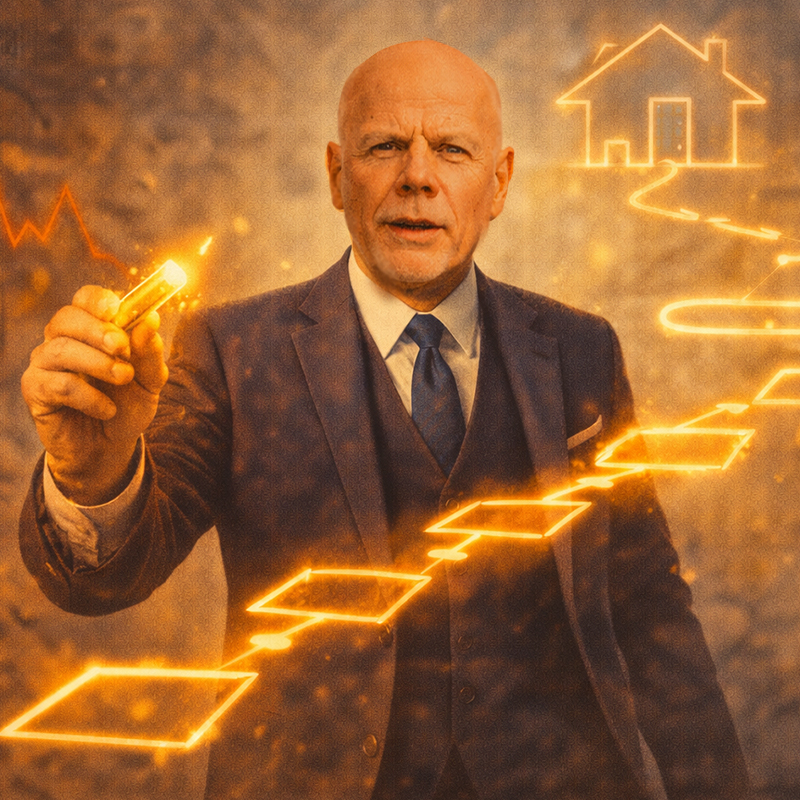
I often compare a Housing Transition Plan to an insurance policy. Having it written down doesn't mean you have to pack your bags tomorrow; it means you're protected.
A proper Housing TLC (Transition and Lifestyle Consulting) plan involves three steps:
Step 1: Clarity. Perform a safety audit and be honest about what you like and dislike about your current space.
Step 2: Options. Compare the "3 Lanes" (Staying Home with support, Retirement Residence, or Long-Term Care) using real financial data.
Step 3: Conditional Action. Create a plan that allows you to say, "If X happens (like a health change or a harsh winter), then we will do Y."
This approach empowers you to keep your choices your choices.
Conclusion: Planning Prevents Panic
My mission is to help you move from a state of indecision to a state of independence. I want you to have a plan so that if circumstances change, you and your family can make decisions with calm confidence rather than being forced by the urgency of a crisis.
Whether you choose to modify your current home to "stay safely" or explore the vibrant community of an Ontario retirement residence, the goal is the same: Quality of Life.
You don't have to carry the magnitude of this process alone.
Ready to Stop Wondering and Start Planning?
If you want to know where to start or what specific options exist in Oakville for your situation, fill out the form below. No sales, no pressure, just an honest conversation to review your plan. Let's talk.
Having a written housing plan doesn't mean you have to pack your bags tomorrow; it means you are protected. I like to think of it as an insurance policy for your autonomy, it ensures that if circumstances change, your choices remain your choices.
Download our free system: "Where Should We Go From Here?"
Use this simple planning system to audit your current costs, identify what truly makes you comfortable, and stop 'guessing' about the future. If you'd prefer an outside, no-pressure perspective, Michael Wright is here to listen and help you map out the path that best protects your quality of life.
Categories
Recent Posts




GET MORE INFORMATION